Blog
The Quality Infrastructure Window Most Virtual Care Companies Miss
Over 90% of virtual care startups lack formal quality programs. This post outlines the four foundations of quality, when to invest in them, and how early formalization prevents drift, payer risk, and operational chaos later.
.png)
Executive summary
- Over 90% of early to mid stage virtual care companies have no formal quality assurance program. Not because they're negligent, but because quality infrastructure feels like something to build later. The longer you wait, the harder it gets.
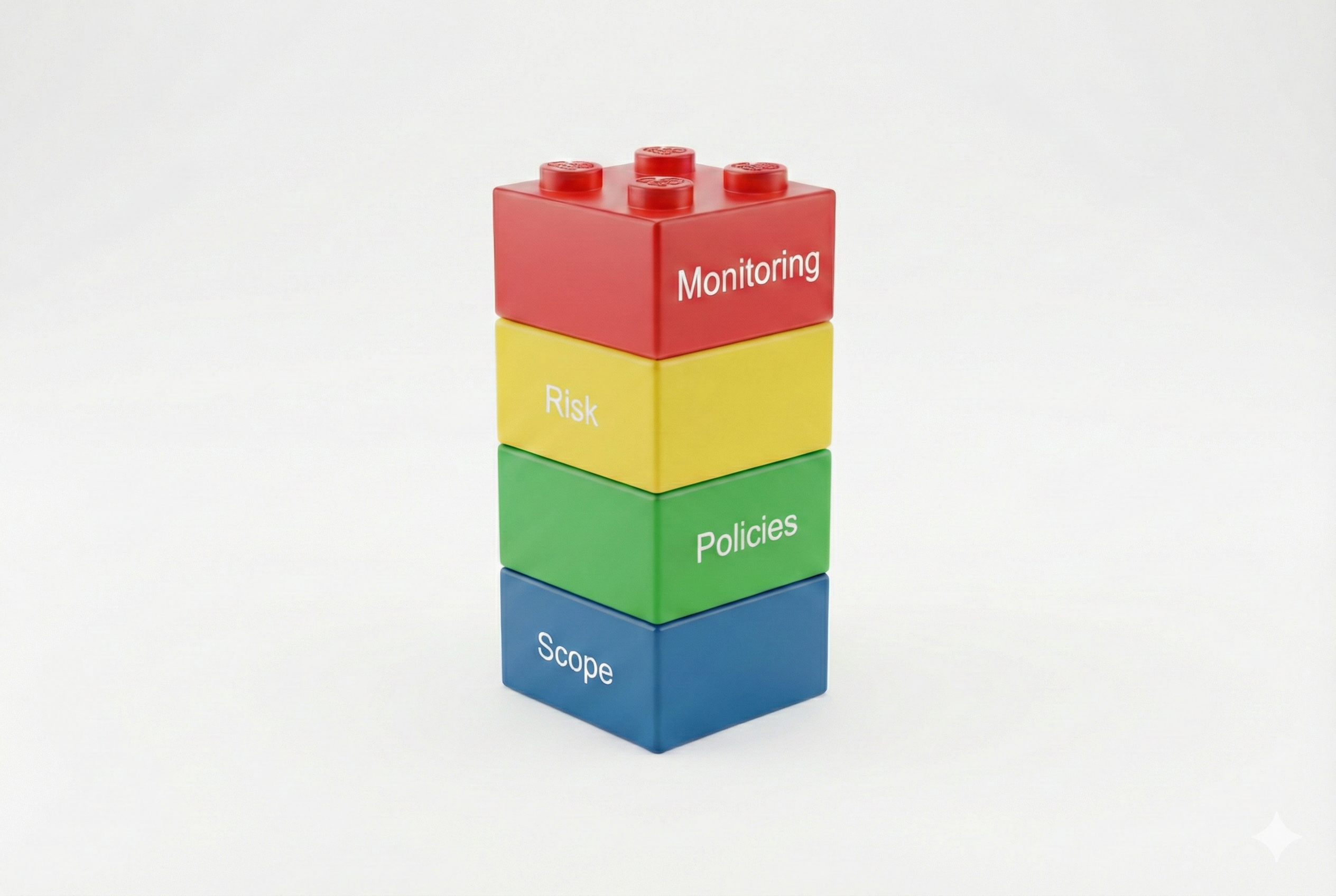
- Every quality program rests on four building blocks: program definition, clinical policies and procedures, risk stratification, and ongoing monitoring and escalation. Each one can start informal, but needs to formalize as patient volume grows.
- The window just before Series A is typically when formalization should happen. After Series B, informal practices have calcified and payer conversations are already underway.
- When a company partners with Bridge, they inherit quality infrastructure that took years to build—policies, audit systems, escalation frameworks—so they can focus on delivering great care instead of building compliance from scratch.
Over 90% of early to mid stage virtual care companies we evaluate have no formal quality assurance program. Not a weak program or an incomplete one. None at all. This statistic surprises people, but it makes sense when you understand what early-stage virtual care founders are actually doing with their time. They're seeing patients. They're iterating on workflows. They're validating whether their approach helps people. Quality infrastructure feels like something to build later, once the core model is proven.
The problem is that quality programs become exponentially harder to build the longer you wait. By the time a company has raised a Series B, informal policies have calcified into "how we do things." States are watching. Payer conversations are underway. Instead of building fresh, founders find themselves unwinding inconsistencies and retrofitting systems that should have been designed from the start.
We've learned through onboarding dozens of virtual care partners that quality should be built incrementally from day one, then formalized as patient volume grows. The companies that get this right survive payer scrutiny and operate at a higher clinical standard than they could have achieved alone.
The four building blocks of virtual care quality
Every quality program rests on four foundational elements, clarity of scope, clinical policies and procedures, risk stratification, and ongoing monitoring and escalation.
Define what you do—and what you don't
The first is program definition, which establishes clarity on scope. What conditions do you treat? What falls outside your practice? Where does your clinical responsibility end and the patient's brick and mortar primary care relationships begin? Early on, this might live in a founder's head—and in virtual care, the founder is often a clinician themselves, so the instincts are usually sound. But what works when you're the one seeing patients breaks down the moment other clinicians join. It needs to exist somewhere they can reference.
When we onboard a new partner, we look for clear articulation of services, defined roles for every provider type, and explicit boundaries around what falls outside scope. We also examine how patients are informed about these boundaries, because misaligned expectations create problems downstream. Many early-stage companies come to us with compelling vision but incomplete program definition. Part of our process forces this clarity. We need partners to articulate exactly what they're doing, how they communicate it to providers and patients, and where responsibilities start and stop. With this foundation, you can ensure consistency across clinicians, geographies, or patient populations.
Give clinicians a reference, not a guessing game
The second building block involves clinical policies and procedures. These are the operational reference documents clinicians actually use when questions arise. How should I conduct a virtual visit? What's our approach to AI integration in clinical workflows? What do I do in an emergency? How do we handle controlled substances in states with special restrictions?
Our clinical policy framework reflects what we've learned from building and supporting dozens of virtual care programs across specialties and states. Dr. Lisa Czanko—a board-certified internist with a Master's in Public Health—leads the development of these standards, bringing both clinical depth and a population-health perspective to policy design. The result is a standardized framework across every partner that establishes baseline rigor, with customization happening in the scope of practice document where each partner articulates their specific clinical program. Partners get policies that are battle-tested from day one, not something they have to figure out on their own.
Know which patients need closer attention
Risk stratification is the third element, and it addresses which patients need closer attention and why. Not every patient requires the same monitoring cadence. A well-designed program knows which conditions or patient profiles warrant tighter follow-up and has systems to ensure it happens. When we evaluate a partner, we ask which patients they monitor more closely and why. A mature program has an answer. An immature one does not. This applies regardless of clinical focus. A thyroid care company has different risk profiles than a broad primary care platform, but both need intentionality about who gets closer attention.
Build the feedback loop that prevents drift
The fourth building block is ongoing monitoring and escalation. Quality programs require continuous feedback loops to prevent drift. We conduct monthly chart audits across all partners, currently reviewing 5% of charts with human reviewers while rolling out AI tools to assess all charts. Common findings include ICD-10 coding errors, missing documentation, and drug interaction oversights. When we identify issues, we have a clear escalation framework. Partners who implement changes immediately continue at normal audit frequency. Partners who are slower to implement changes see increased audit frequency the following month until improvements are in place. We take this seriously—when a partner consistently falls short of the standards we've set together, we're willing to part ways. It's happened, and it's part of how we maintain the bar.
When to build what
The timing question trips up many founders. Quality programs exist on a spectrum, and the mistake is either ignoring the work entirely or over-investing before validating the care model.
From day one, you need awareness without massive investment. You need program definition, even if informal. You need to think about which patients could go sideways. You don't need a full-time quality hire or a fifty-page policy manual yet. But you do need clinical leadership that understands what good looks like and can recognize when something feels off.
The window just before Series A is typically when formalization should happen. At this point, you've proven the model works and seen enough patients to understand your actual risk profile. You're about to scale, talk to payers, and attract regulatory attention. This is when a dedicated quality function pays for itself.
After Series B, formalization becomes significantly harder. Informal policies have become entrenched. States are already watching. Payer conversations are underway, and they're asking questions you may not have clean answers to. The companies that get this right treat quality as a continuous thread present from day one, formalized at the right moment, and never treated as something you finish.
What payers should know
When a virtual care company partners with Bridge, quality infrastructure comes built in.
Before a partner sees their first Bridge-enabled patient, we require a clinical onboarding questionnaire completed by their clinical leadership. We require program scope to be defined and documented. We deploy a full suite of clinical policies. And we complete a risk assessment, flagging concerns and requiring resolution before we proceed.
On an ongoing basis, we conduct monthly chart audits across all partners. We escalate directly when issues arise. Erin Flynn, DNP, our Clinical Quality Lead is a practicing nurse practitioner who can speak clinician to clinician. And we're willing to sever relationships when partners won't meet standards. Virtual care should be equivalent to in-person care. That's the bar.
Infrastructure you inherit, not build
Quality done well is invisible. Clinicians have the guidance they need. Patients get consistent care. Payers see outcomes without surprises.
When quality fails, everyone notices. States come knocking. Payers ask uncomfortable questions. One bad outcome becomes a reputational crisis that affects every virtual care company trying to do things right.
The 90% of companies without formal quality programs are not negligent. They're focused on proving their care model works. But somewhere between "this works" and "let's scale," infrastructure becomes unavoidable.
This is where Bridge sits. Every virtual care company that partners with us would otherwise need to build a best-in-class quality and safety program from the ground up. They'd need to hire clinical quality leadership, develop comprehensive policies, design audit systems, and create escalation frameworks. They'd need to do all of this while also building their care model, hiring clinicians, and serving patients.
We've already done that work. When a company joins Bridge, they inherit a quality infrastructure that took years to build and refine. They get program definition templates shaped by dozens of implementations. They get policies pressure-tested across multiple states and specialties. They get ongoing chart audits and escalation protocols that actually work. The companies that partner with us don't just survive scrutiny. They start with a foundation that would have taken them years to build alone, and they get to focus on what they do best: delivering great care.